
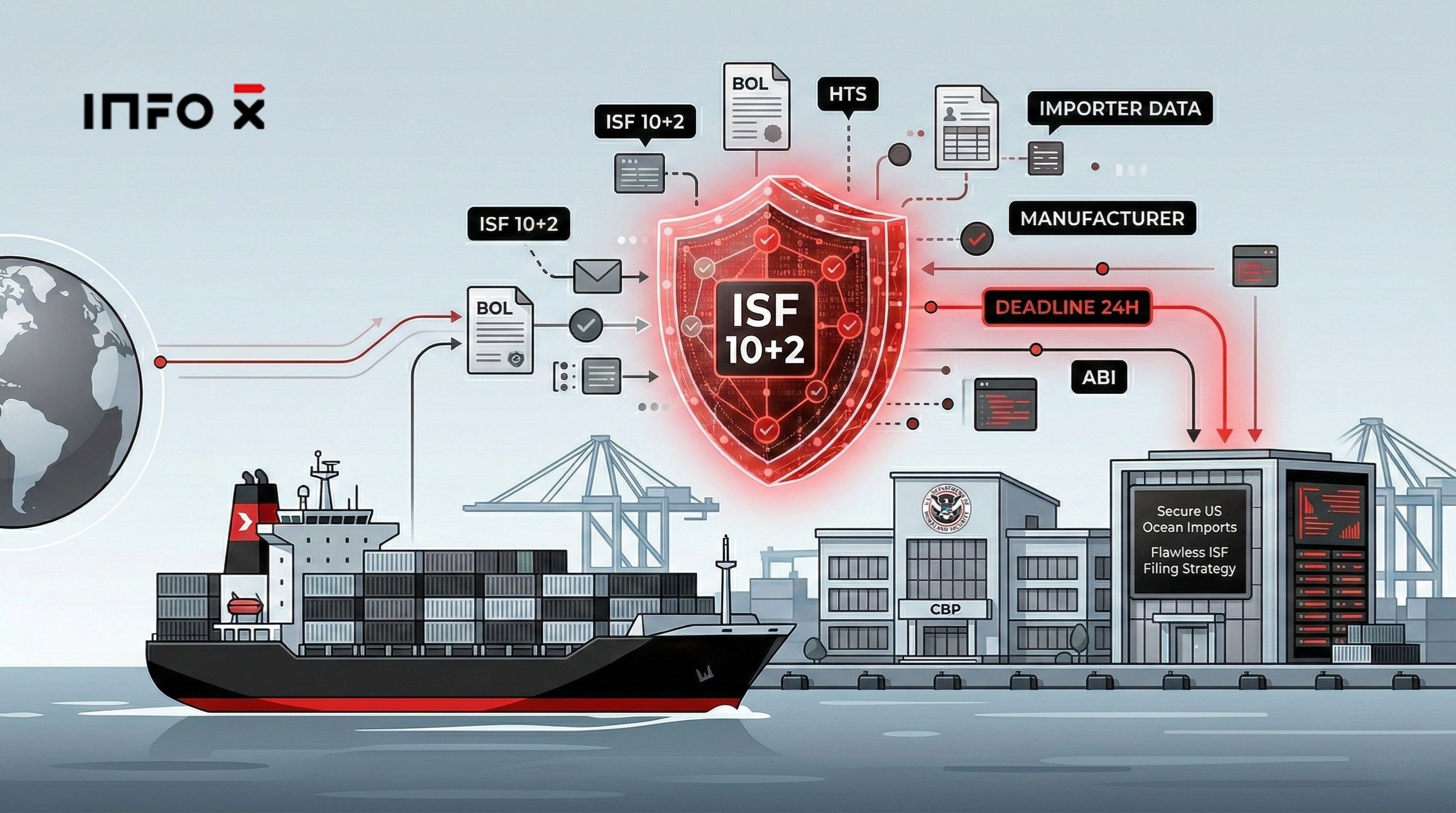
Ocean freight operations into the United States face unprecedented scrutiny from federal regulatory bodies. Customs compliance is no longer a peripheral back office function; it is the core driver of supply chain velocity. For US importers, freight forwarders, Non-Vessel Operating Common Carriers, and large Beneficial Cargo Owners, navigating U.S. Customs and Border Protection mandates requires absolute precision. At the forefront of this regulatory environment is the Importer Security Filing.
Treating the Importer Security Filing merely as mandatory paperwork is a fundamental operational vulnerability. It is an advanced risk management protocol that dictates whether cargo moves seamlessly across borders or faces catastrophic delays at the port of entry. A flawless ISF filing strategy protects inventory flow, prevents margin erosion from severe financial penalties, and maintains a company's standing as a highly compliant Importer of Record. This analysis dissects the operational realities of ISF compliance, the severe consequences of execution failures, and the architectural components required to build a resilient U.S. customs filing strategy.
Decoding the Operational Reality of ISF 10+2
The Importer Security Filing, universally recognized within the industry as ISF 10+2, is a strict advanced cargo information mandate. Its primary function is border security. U.S. Customs and Border Protection utilizes this specific data set within its Automated Targeting System to comprehensively assess the risk profile of maritime shipments before the cargo ever boards a vessel bound for the United States.
From a strict operational perspective, the mandate requires the Importer of Record to submit ten highly specific commercial data elements, while the ocean carrier is responsible for transmitting an additional two elements. This comprehensive submission must be completed, transmitted via the Automated Broker Interface, and officially accepted by CBP at least 24 hours prior to the cargo being laden aboard the vessel at the foreign port of origin.
CBP enforcement patterns have evolved significantly in recent years. The agency relies heavily on sophisticated automated targeting algorithms to instantly cross-reference incoming ISF data against the Automated Manifest System and the commercial Bill of Lading. Discrepancies do not trigger lenient manual reviews; they trigger immediate automated red flags. Strict enforcement is the absolute standard, and CBP officers will always prioritize supply chain security over commercial convenience. Understanding this rigid enforcement logic is the critical first step in building a resilient import framework.
The required data points include complex information such as the actual manufacturer details, seller data, buyer data, ship to party, container stuffing location, consolidator details, Importer of Record identification number, consignee number, country of origin, and commodity Harmonized Tariff Schedule classification numbers. Gathering these specific elements requires seamless communication across global time zones, making the filing process highly susceptible to coordination breakdowns if not managed strategically.
Critical Vulnerabilities in Ocean Import Compliance
Supply chain friction often originates from predictable, preventable errors within the customs filing process. Even sophisticated Beneficial Cargo Owners and experienced freight forwarders encounter severe operational disruptions due to procedural blind spots and fragmented data management.
The most heavily penalized infraction in ocean import compliance is the failure to transmit data 24 hours prior to vessel loading. Operational realities at origin ports often clash with this rigid federal deadline. Cargo might be gated into the terminal early, vessel schedules change abruptly without notice, or foreign manufacturers delay sending the required commercial invoices. Submitting the required data while the vessel is already en route is an immediate and verifiable violation. CBP visibility into actual terminal loading times is absolute, and late filings are automatically flagged for severe liquidated damages.
Data integrity between the Importer Security Filing and the ocean carrier manifest is strictly non-negotiable. A very common systemic failure occurs when the ISF is filed using a preliminary House Bill of Lading number, but the actual ocean carrier transmits the manifest to the Automated Manifest System using a Master Bill of Lading or an altered House Bill number. If the CBP system cannot seamlessly match the ISF file to the AMS manifest file, the agency considers the filing entirely incomplete or missing. This exact mismatch prevents customs clearance upon arrival and flags the shipment for immediate and intense review.
A frequent point of failure involves the confusion over the actual manufacturer versus the trading company or invoicing entity. CBP regulations specifically require the name and address of the entity that last manufactured, assembled, produced, or grew the physical commodity. Importers frequently default to listing the middleman seller or the vendor on their documentation. This error immediately corrupts the data integrity of the filing and creates massive discrepancies that are easily uncovered during a routine customs audit.
Global supply chains are inherently dynamic, and cargo details occasionally change after the initial filing is accepted. Updating commercial quantities, altering the HTS classification codes, or changing the final delivery destination requires a formal ISF amendment. However, executing these amendments after the vessel arrives at the US port of discharge creates significant compliance friction. While CBP allows data updates, late-stage changes heavily impact the algorithmic risk score of the specific shipment, frequently triggering physical examinations to verify the new information.
Every Importer Security Filing requires an active and valid customs bond. Importers frequently encounter automated rejections because their continuous customs bond has lapsed or they have inadvertently exceeded their total bond limit. For infrequent importers attempting to use single transaction bonds, failing to properly secure the bond prior to data transmission results in an immediate hard reject from the Automated Broker Interface. Without a valid bond actively linked to the Importer of Record number, the required data simply cannot be accepted into the federal system.
Technical infrastructure plays a massive and often underappreciated role in trade compliance. Filing through outdated or uncertified software platforms often results in syntax errors, formatting rejections, or dropped electronic connections. A company might genuinely believe they have submitted the filing on time, only to discover days later that CBP never actually generated an acceptance message due to a backend system failure on the software provider side.
The fundamental challenge of ISF compliance is not the data itself, but the highly fragmented nature of global trade. The required data resides simultaneously with the foreign factory, the origin booking agent, the origin forwarder, and the US customs broker. When communication relies on fragmented email chains, manual data entry processes, and differing time zones, information bottlenecks become inevitable. A simple delay by one overseas party invariably results in an untimely filing by the ultimate execution partner in the United States.
Financial and Operational Consequences of Non-Compliance
U.S. Customs and Border Protection does not view ISF violations as minor administrative oversights. The penalties are intentionally punitive, designed specifically to force strict adherence to federal security protocols.
Punitive Liquidated Damages: CBP strictly enforces a standard penalty of $5,000 per individual violation. Importantly, a single ocean shipment can easily incur multiple violations simultaneously. A filing that is both fundamentally late and highly inaccurate can result in $10,000 in liquidated damages. These heavy financial fines impact the corporate bottom line directly and cannot be easily mitigated without providing significant and documented institutional compliance efforts.
Shipment Holds and Do Not Load Directives: Beyond the immediate financial penalties, the physical operational disruption is severe. If data is flagged prior to loading at the foreign port, CBP will issue a "Do Not Load" message directly to the ocean carrier. The cargo will remain entirely stranded at the foreign port, accruing heavy terminal storage fees and completely derailing corporate inventory forecasts. If the violation is only discovered while the vessel is actively on the water, the cargo will face an automatic and unbreakable hold upon discharge at the US port.
Escalated CBP Scrutiny and Cargo Exams: Consistent non-compliance directly impacts your algorithmically generated importer risk profile. Importers with a documented history of late or inaccurate filings face a mathematically higher percentage of intensive customs exams. Non Intrusive Inspections and full warehouse physical unloads cost the importer thousands of dollars in Centralized Examination Station fees, specialized drayage, and extended demurrage, completely destroying planned landed cost margins.
Long-Term Corporate Risk: Consistent filing failures jeopardize an importer's ability to participate in highly valuable trusted trader programs such as the Customs Trade Partnership Against Terrorism. Furthermore, severe and repeated negligence can easily trigger comprehensive customs audits, tying up internal corporate resources for months and potentially uncovering other systemic trade compliance violations across different regulatory areas.
Architecting a Flawless ISF Filing Strategy
Mitigating these immense risks requires moving completely away from reactive manual data entry and actively building a proactive, highly resilient execution framework. A modern US customs filing strategy integrates advanced technology, rigid internal protocols, and deep regulatory expertise. Understanding how to find an ISF filing service that perfectly aligns with this proactive methodology is a critical executive decision for modern supply chain leaders.
Relying on manual keystrokes to process thousands of data points is a guaranteed path to failure. A flawless compliance strategy utilizes intelligent platforms that ingest data directly from commercial documents, factory purchase orders, or enterprise resource planning systems. Automating this primary data extraction greatly reduces the human error inherent in transcribing complex commercial data elements and massively accelerates the actual submission timeline.
Before any compiled data ever hits the Automated Broker Interface, it must pass through rigid internal validation protocols. This includes automated systematic checks to verify the exact format of the Bill of Lading, validate the Importer of Record number directly against active CBP databases, and ensure all commodity HTS codes are active and correctly formatted for the current year. Identifying these minute discrepancies before transmission entirely prevents CBP rejections and secures an immediate automated acceptance message.
World-class compliance operations operate internally on a 72-hour rule rather than the federal 24-hour rule. Establishing strict internal corporate mandates requiring that all commercial data must be finalized and transmitted three full days prior to the estimated time of departure provides a highly critical operational buffer. This expanded window allows ample time to resolve unexpected bill of lading discrepancies, secure missing continuous bond information, or address unforeseen technical transmission errors completely without violating the strict federal mandate.
Every single action taken on an import shipment must be meticulously recorded. A robust strategy includes real-time visibility into the exact status of the regulatory filing. Compliance managers must be able to see precisely when data was received from the factory, when it was transmitted to the government, and the exact second when the CBP acceptance message was officially recorded. This secure digital audit trail is vital for internal quality control and serves as absolutely necessary documentation if an importer ever needs to legally petition a liquidated damages claim with customs authorities.
Even with the absolute best systems in place, operational exceptions will occur. A flawless strategy actively anticipates these rare exceptions and outlines highly clear escalation paths. If a critical commercial invoice is missing 48 hours before the scheduled loading time, the system must automatically alert the origin forwarder, the corporate buyer, and the customs compliance manager simultaneously. Resolving exceptions through standardized and automated workflows entirely prevents the panic-driven manual filings that consistently lead to severe penalties. Utilizing a comprehensive customs filing partner ensures these complex global escalation protocols are managed expertly across all relevant jurisdictions and varying regulatory frameworks.
The Executive Action Checklist for Importers
To immediately strengthen your operational compliance posture, implement the following structured procedural reviews across your entire global supply chain:
- Audit your current historical transmission timelines to determine the true factual percentage of filings completed a full 48 hours prior to vessel loading.
- Verify your continuous customs bond active limits and establish automated system alerts for upcoming renewal deadlines.
- Implement strict vendor routing guides that financially penalize origin factories for any late commercial document submission.
- Standardize the specific House Bill of Lading format requirements strictly across all your designated ocean carriers and consolidation agents.
- Review your historical Automated Broker Interface rejection rates to aggressively identify any recurring data mismatch patterns.
- Establish a direct and dedicated communication channel between your origin consolidation agents and your active US customs filing desk.
- Conduct quarterly internal corporate audits meticulously, comparing your final commercial invoices against the exact data points actually transmitted to CBP.
Securing Your Supply Chain Velocity with Info-X
Mastering U.S. Customs and Border Protection mandates requires significantly more than basic data entry software; it requires a dedicated institutional commitment to supply chain integrity. The sheer complexities of modern ocean import compliance demand a specialized provider who inherently understands the nuances of global trade, algorithmic border risk targeting, and the harsh operational reality of port logistics.
Info-X stands as a premier recognized authority in global trade logistics and compliance technology. We provide highly robust enterprise-grade solutions designed specifically for ambitious freight forwarders, Non-Vessel Operating Common Carriers, and large-scale importers who simply cannot afford regulatory supply chain disruptions. By carefully integrating our deep regulatory expertise with advanced automated software solutions, we successfully transform heavy regulatory burdens into distinct operational advantages.
Deploying a sophisticated ISF filing service through Info-X ensures your critical commercial data is validated, swiftly transmitted, and officially accepted with absolute precision. We systematically eliminate the operational friction of manual data entry, fiercely protect your corporate regulatory risk profile, and ensure your ocean freight moves seamlessly across the border, completely without delay or penalty. When absolute supply chain predictability is your primary corporate objective, Info-X is the trusted technology partner fully equipped to secure your global compliance framework.